




President Donald Trump has said on multiple occasions in recent months that he takes a “large” dose of aspirin to prevent cardiovascular disease. His comments could perpetuate a common misperception, so we wanted to clarify the current science and what the recommendations are.
Low-dose aspirin is recommended for people who have already experienced a cardiovascular event, but it generally isn’t recommended for those looking to avoid a first heart attack or stroke — and neither is high-dose aspirin.
Trump brought up his aspirin use in a Jan. 22 press gaggle when he was asked by a reporter about some bruising on his hand. “I would say take aspirin if you like your heart. But don’t take aspirin if you don’t want to have a little bruising,” he said. “I take the big aspirin. And when you take the big aspirin, they tell you, you bruise.”
The Wall Street Journal reported in January that Trump’s physician said the president takes 325 milligrams of aspirin a day for “cardiac prevention.” That’s considered a high dose, compared with a typical low, or “baby,” aspirin dose of 81 milligrams.
“They say aspirin is good for thinning out the blood, and I don’t want thick blood pouring through my heart,” Trump told the outlet in the same story, which drew on an October interview with the president. “I want nice, thin blood pouring through my heart.”
Trump, who is 79 years old, similarly told the New York Times on Jan. 7 that he takes a “large dose” of aspirin because he wants “nice, thin blood going through my heart,” adding that he has taken aspirin for 30 years and has never had a heart attack or been diagnosed with heart disease of any kind.
Trump has expressed some awareness that his aspirin use deviates from the norm, suggesting on various occasions that his doctors have said that he is taking too much aspirin. It’s not clear if he knows that even low-dose aspirin is not typically recommended for people who don’t have cardiovascular disease. In his remarks, he is primarily speaking about his own case and does not appear to be giving advice to others.
Still, because his remarks could reinforce common misunderstandings about aspirin, we wanted to address the topic.
When we inquired, the White House did not clarify what Trump’s doctors have recommended, but provided a statement attributed to Trump’s physician, Dr. Sean Barbabella, that said the president takes 325 milligrams of daily aspirin “to maintain his exceptional cardiovascular health.” Barbabella added that Trump’s “medical evaluations and laboratory results continue to show excellent metabolic health, and have revealed his cardiovascular health puts him 14 years younger than his age. Overall, the President remains in exceptional health and perfectly suited to execute his duties as Commander in Chief.”
Balancing Risks and Benefits
Aspirin is thought to lower cardiovascular risk by reducing blood clotting. By making platelets — the cell fragments that are involved in clotting — less sticky, clots are less likely to form. But for the same reason, aspirin also increases the risk of potentially dangerous bleeding.
While aspirin used to be more widely recommended, as early as 2014 the Food and Drug Administration concluded that “the data do not support the use of aspirin as a preventive medication by people who have not had a heart attack, stroke or cardiovascular problems, a use that is called ‘primary prevention.'”
“In such people,” the agency explained on its website, “the benefit has not been established but risks—such as dangerous bleeding into the brain or stomach—are still present.” The agency also emphasized that people should consult a doctor before starting any daily aspirin regimen.
In subsequent years, additional studies have shown that for many people without cardiovascular disease, the benefits don’t outweigh the risks.
Since 2019, the American College of Cardiology and American Heart Association have said that aspirin “should be used infrequently in the routine primary prevention of [atherosclerotic cardiovascular disease] because of lack of net benefit.”
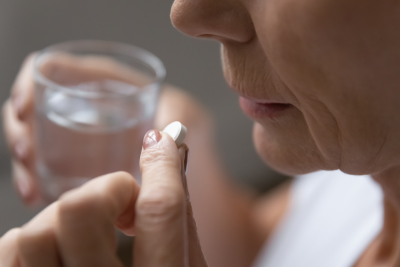
“Most people without known cardiovascular disease like a prior heart attack, stroke, or blockages in major arteries, do not need aspirin,” Dr. Ann Marie Navar, a preventive cardiologist at the University of Texas Southwestern Medical Center, told us. “This will increase their risk of bleeding problems – not just bruising but bleeding in the stomach or gut.”
Instead, she advised, people should avoid smoking, eat a heart-healthy diet, get regular exercise, and focus on lowering their cholesterol and keeping their blood pressure controlled.
She added that bruising is “common” among aspirin users and that mild bruising “is not concerning.”
The details are a little more nuanced in Trump’s case, as his cardiovascular risk is somewhat elevated, but the president is also taking more aspirin than is recommended. Dr. Donald Lloyd-Jones, chief of preventive medicine at Boston University, told us that given past reports that Trump has plaque build-up in his coronary arteries, it “may be reasonable” to take low-dose aspirin for cardiac prevention purposes. But, he said, the high dose “is certainly not needed or indicated.”
In 2018, Trump’s physician revealed that the president completed a coronary artery calcium test — a scan evaluating the amount of plaque in his arteries — with a moderately high score of 133. Although common for a man of his age, a score over 100 is suggestive of heart disease. Lloyd-Jones said the score “indicates that he has atherosclerotic coronary heart disease and subclinical cardiovascular disease at a moderately advanced state.”
If Trump is unaware of the changing practices around aspirin, he wouldn’t be alone. Last year, a survey conducted by the Annenberg Public Policy Center, our parent organization, found that nearly half of U.S. adults mistakenly believe that the benefits of low-dose aspirin for cardiac prevention outweigh the risks.
What’s Recommended
For people without cardiovascular disease, daily aspirin is not explicitly recommended for any population for cardiovascular disease prevention.
According to the 2019 guidelines from the American College of Cardiology and American Heart Association, which are the most recent, low-dose aspirin “might be considered” for people 40 to 70 years old who are at higher cardiovascular risk and do not have an increased risk for bleeding. For anyone above the age of 70 or a person of any age who has a higher risk of bleeding, the groups advise against routine aspirin use.
Similarly, the U.S. Preventive Services Task Force, a federally funded panel of independent national experts in disease prevention, advised in a 2022 update against starting low-dose aspirin for primary prevention of cardiovascular disease in people 60 years or older. For adults 40 to 59 years old at elevated risk only, the group said the decision to use aspirin “should be an individual one,” as the net benefit is “small.”
Both guidelines were influenced by three large placebo-controlled trials that were published in 2018, which collectively involved more than 47,000 patients and helped clarify the current harms and benefits of low-dose aspirin in various groups.
The ARRIVE trial, which included men age 55 and older and women 60 and older at average cardiovascular risk, identified no cardiovascular benefit to low-dose aspirin and a small increased risk of gastrointestinal bleeding.
The ASPREE trial, which enrolled people who did not have cardiovascular disease and were mostly 70 years and older, found low-dose aspirin “resulted in a significantly higher risk of major hemorrhage and did not result in a significantly lower risk of cardiovascular disease than placebo.”
The ASCEND study, which evaluated low-dose aspirin use in people 40 years and older with diabetes but no known cardiovascular disease, did identify a reduction in vascular events, but those were “largely counterbalanced,” according to the authors, by an increase in major bleeding events.
Earlier studies had found aspirin was more effective, Lloyd-Jones told us. As he also detailed in a 2022 editorial in JAMA Cardiology, this is likely because in the past, physicians were not very good at controlling blood pressure, cholesterol or other major cardiovascular risk factors. Now, in an era with statins and blood pressure medications, and less smoking, for example, there is less “room” for aspirin to be needed or to help, he said. And because aspirin has retained the same bleeding risk, it has shifted the risk-benefit calculus.
“For patients without ischemic heart disease, there is very clear evidence from randomized controlled trials that aspirin is not associated with a clear benefit (and may be associated with harm from bleeding),” Dr. William Schuyler Jones, an interventional cardiologist at Duke University, told us in an email, referring to the type of heart disease that occurs when arteries are narrowed, usually due to plaque build-up.
Still, Navar said that there is a bit of a gray area — and that many preventive cardiologists do recommend aspirin for people “with evidence of a lot of cholesterol buildup in their heart arteries,” such as those with “very high” coronary artery calcium scores.
Experts emphasized to us that for all the confusion and discussion about the recommendations for those without cardiovascular disease, for those with disease — such as after a stroke, heart attack or after a stent — there remains a strong recommendation to take low-dose aspirin to prevent another event, or what’s called secondary prevention. Some patients, however, may not take aspirin if they are on other blood thinners or anti-platelet medications, Navar said.
A 2021 trial, which Jones led, compared high- and low-dose aspirin in patients with established cardiovascular disease. It did not find that the higher dose was more effective. And while it also didn’t find that the higher dose led to more bleeding, patients often preferred to switch to the low-dose regimen.
Jones said patients with cardiovascular disease should take the low dose.
Other trials and observational studies, Navar said, “have shown higher doses of aspirin do increase bleeding risk.”
Editor’s note: FactCheck.org does not accept advertising. We rely on grants and individual donations from people like you. Please consider a donation. Credit card donations may be made through our “Donate” page. If you prefer to give by check, send to: FactCheck.org, Annenberg Public Policy Center, P.O. Box 58100, Philadelphia, PA 19102.