




Many Democrats have claimed that President Donald Trump didn’t have the legal authority to unilaterally order the Feb. 28 joint military airstrikes with Israel that resulted in the death of the supreme leader of Iran, Ayatollah Ali Khamenei.
Experts have told us that, according to an originalist interpretation of the U.S. Constitution, congressional approval for the use of military force against another country is required. Article I, Section 8 of the U.S. Constitution gives the power “To declare War” to Congress.
However, in practice, several presidents have unilaterally ordered military action abroad without authorization from Congress.
In this story, we’ll look at what Democrats have said about Trump’s latest military order and review what experts already told us in similar past cases.
Claims of Illegality
Not long after the attack on Saturday, several Democrats were quick to criticize Trump’s military operation in official statements or media appearances.
Sen. Ruben Gallego of Arizona said in a Feb. 28 statement on his congressional website, “President Trump promised no more forever wars. Instead, he has illegally dragged us into another one without congressional authorization and no long term strategy.”
Sen. Tim Kaine of Virginia called it an “illegal war” on “Fox News Sunday” on March 1.
“The Constitution says no declaration of war without Congress,” he said. “The president has called this war against Iran. The president can act to imminently defend the United States against imminent attack, if that happens, without congressional approval, needing later ratification by Congress. But if you’re going to initiate war, you need Congress. The president not only did not come to Congress to seek a debate or vote, he acted without even notification to the vast majority of us.”
That same day, on CBS’ “Face the Nation,” Sen. Chris Murphy of Connecticut also called Trump’s actions “illegal” without authorization. “Congress wouldn’t vote to give him the permission to do it, but he’s obligated to come to Congress,” Murphy said.
But Secretary of State Marco Rubio said that members of Congress were informed consistent with current law.
“We notified Congress,” Rubio told reporters in a March 2 press gaggle. “I mean, we notified the Gang of Eight. We notified congressional leadership. There’s no law that requires us to do that. The law says we have to notify them 48 hours after beginning hostilities. We’ve done that.”
The Gang of Eight refers to a special group of eight members of Congress, including the four top Republicans and Democrats in the House and Senate, as well as the chairperson and ranking member of the House and Senate Select Committees on Intelligence. White House Press Secretary Karoline Leavitt wrote on X that, prior to the attacks, Rubio “called all members of the gang of eight to provide congressional notification, and he was able to reach and brief seven of the eight members.”
Rubio said there was no legal requirement to notify all members of Congress at that time.
Expert Opinion
We previously examined the legality of unilateral uses of military force by presidents when the U.S. bombed three Iranian nuclear facilities in June, and again when the U.S. carried out the military operation in Venezuela that led to the capture of that country’s president, Nicolás Maduro, in January.
One of the experts we quoted in our January story, Oona Hathaway, a professor of international law at Yale Law School, was definitive in her assessment of the latest use of military force abroad.
“The strikes on Iran are blatantly illegal,” she wrote in an X post on Feb. 28. “I explained in June why the strikes on Iran’s nuclear facilities were unlawful under US and international law. Everything I wrote then is true today, but this is a far larger assault with far graver consequences.”
In her guest essay for the New York Times last year, Hathaway wrote, “It has become almost quaint to observe that the Constitution gives Congress, not the president, the power to declare war. Yes, the president is commander in chief of the military, but he is obligated to seek authorization from Congress before he initiates a war.”
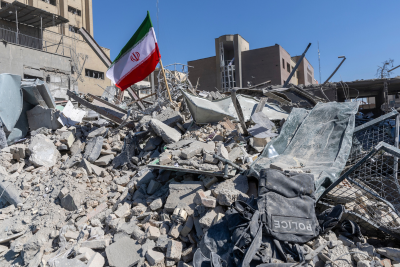
Hathaway said the only time that a president does not need advance congressional approval “is when the United States has been attacked and he must act quickly to protect the country.” She said the president is also “required to seek authorization from the United Nations Security Council,” since the U.S. long ago signed on to a U.N. Charter that prohibits unjustified uses of military force by one country against another.
But other legal experts have told us that the issue of legality isn’t so clear.
Peter Shane, a constitutional law scholar and adjunct professor at New York University School of Law, told us in June that it is “difficult to give a definitive answer” on the constitutionality of such military actions “because there is so much disagreement about how the Constitution should be interpreted with regard to the unilateral presidential deployment of military force.”
In an email, he said, “Under the most persuasive reading of the Founding era, the Constitution does not authorize Presidents to deploy military force abroad without advance congressional authorization.” But he added that it has “long been the position” of the Justice Department’s Office of Legal Counsel “that history has ratified unilateral presidential deployments of military force as long as (1) the deployment serves ‘sufficiently important national interests,’ as judged by the President, and (2) the deployment does not portend a ‘prolonged and substantial military engagement, typically involving exposure of U.S. military personnel to significant risk over a substantial period.’”
Kermit Roosevelt, a constitutional expert and professor at the University of Pennsylvania Carey Law School, made similar points to us for our June story.
“The Constitution says that Congress has the power to declare war, and the records of the Constitutional Convention are pretty clear that the drafters did not want to give one person the power to take the United States into war,” Roosevelt told us in an email. “However, presidents have done things that count as acts of war under international law without congressional authorization, like the Libya bombings [under then-President Barack Obama], and no one has stopped them, so our practice has departed from the text and original understanding.”
As for when Congress has to be notified of military action, the Congressional Research Service has explained that the 1973 War Powers Resolution passed by Congress requires presidents within 48 hours “to report to Congress any introduction of U.S. forces into hostilities or imminent hostilities.” After the military action is reported, the resolution “requires that the use of forces must be terminated within 60 to 90 days unless Congress authorizes such use or extends the time period.” It also “requires that the ‘President in every possible instance shall consult with Congress before introducing’ U.S. Armed Forces into hostilities or imminent hostilities.”
Roosevelt told us that the resolution should not be interpreted to mean the president “can do what he wants for 48 hours before notifying Congress, or for 60 days even if Congress doesn’t” grant its approval. He said, “That’s not consistent with the Constitution and it’s not consistent with the purpose and policy section of the WPA, which says that the intent is to make sure that the President’s power to engage in military action is exercised ‘only pursuant to (1) a declaration of war, (2) specific statutory authorization, or (3) a national emergency created by attack upon the United States, its territories or possessions, or its armed forces.’”
The “48 hour and 60 day windows are supposed to be relevant to presidential responses to attacks, and the President is not supposed to be able to initiate wars at all,” he explained, with emphasis.
On March 2, Trump sent a report informing Congress that the strikes he authorized against Iran “were undertaken to protect United States forces in the region, protect the United States homeland, advance vital United States national interests, including ensuring the free flow of maritime commerce through the Strait of Hormuz, and in collective self-defense of our regional allies, including Israel.”
The president said he “acted pursuant to my constitutional authority as Commander in Chief and Chief Executive to conduct United States foreign relations.”
An ‘Empty’ Debate
Since earlier this year, Jack Goldsmith, a Harvard Law School professor and a nonresident senior fellow at the American Enterprise Institute, has been saying that the debate among experts about the legality of unilateral presidential uses of force is largely meaningless.
“Immediately after these operations happen, every time this happens – Libya, Kosovo, Iran, all of these unilateral uses of force without congressional authorization – we immediately jump to the law and commentators immediately say this is illegal, depending on whether they like the war or not, or they defend it as being lawful, and we have this debate about whether it’s lawful or not, and I frankly think it’s kind of a meaningless debate in almost every circumstance,” he said in a Jan. 5 online discussion with another legal scholar, Bob Bauer, a New York University School of Law professor of practice.
Goldsmith said the question is why has Congress ceded the power to use military force to the president without restrictions. He made the same points in a Feb. 28 analysis after the U.S-Israel attack on Iran.
“As I’ve been saying for a while, there are no effective legal limitations within the executive branch. And courts have never gotten involved in articulating constraints in this context. That leaves Congress and the American people,” he wrote. “They have occasionally risen up to constrain the president’s deployment of troops and uses of force—for example, in Vietnam, and in Lebanon in 1983, and in Somalia in 1993. But those actions are rare and tend only to happen once there is disaster.”
He said “rhetoric of legal constraint, and debates about the legality of presidential uses of force, are empty,” and “deflect attention from Congress’s constitutional responsibility to exercise its political judgment and the political powers that the framers undoubtedly gave it to question, to hold to account, and (should it so choose) to constrain presidential uses of force.”
Congress may vote this week on war powers resolutions drafted by members of the House and Senate, including Republican Rep. Thomas Massie and Republican Sen. Rand Paul, both of Kentucky. The resolutions would require congressional approval before any further military action in Iran is taken.
Trump could veto a passed resolution, and if that happens, there may not be enough support in Congress to override the veto. Few Republicans have indicated support for a war powers resolution.
Last June, the Senate failed to pass a war powers resolution that was introduced after the bombing of Iranian nuclear facilities. Then in January, the House and Senate failed to pass a resolution after the military raid in Venezuela.
Trump told the New York Times that the U.S-Israel attacks on Iran could go on for “four to five weeks.”
Editor’s note: FactCheck.org does not accept advertising. We rely on grants and individual donations from people like you. Please consider a donation. Credit card donations may be made through our “Donate” page. If you prefer to give by check, send to: FactCheck.org, Annenberg Public Policy Center, P.O. Box 58100, Philadelphia, PA 19102.