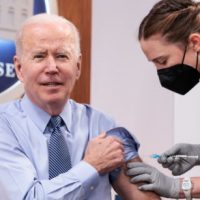

At the end of March, the Food and Drug Administration authorized a second COVID-19 booster dose for people 50 years of age and older. But the data supporting the extra shot is limited. Here, we break down the available evidence and share what scientists recommend.
Featured Posts
The Facts on ‘De-Nazifying’ Ukraine
The Facts on Judge Jackson’s Sentencing in Child Porn Cases
The Facts on Judge Jackson’s Defense Work for Gitmo Detainees
In the first day of Supreme Court confirmation hearings for Judge Ketanji Brown Jackson, Republican Sen. Marsha Blackburn echoed a party talking point, saying that Jackson used her “time and talent not to serve our nation’s veterans or other vulnerable groups, but to provide free legal services to help terrorists get out of Gitmo and go back to the fight.” Jackson was a federal public defender on four cases, in which the men were not convicted, and continued to represent one man when she worked for a private firm.
FactChecking Claims About the Conflict in Ukraine
Russia launched a full-scale invasion of Ukraine on Feb. 24, following months of military buildup and, as we’ve written, repeated denials by Russian officials that their country planned to invade. As is often the case with major news events, we have seen several false and misleading claims made on social media and by politicians related to the conflict.
Examining U.S. ‘Energy Independence’ Claims
FactChecking Biden’s State of the Union Address
Benefits of COVID-19 Vaccination Outweigh the Rare Risk of Myocarditis, Even in Young Males
Rare cases of myocarditis have been reported following the mRNA COVID-19 vaccines, particularly among young males after a second dose. Most cases resolve quickly without the need for advanced therapies, although research on any potential long-term effects is ongoing. Nonetheless, the benefits of vaccination outweigh the risks in all populations, even in young males.
FactChecking Trump’s CPAC Speech
Russian Rhetoric Ahead of Attack Against Ukraine: Deny, Deflect, Mislead
As Russia amassed troops on the Ukrainian border, Russian leaders repeatedly denied that their country had plans to invade Ukraine. They blamed the U.S., Ukraine and others for the tension, insisting that Russia is a “peaceful country” and that it is “not going to attack anyone.” Here we round up some of their statements during a monthslong misinformation campaign.